
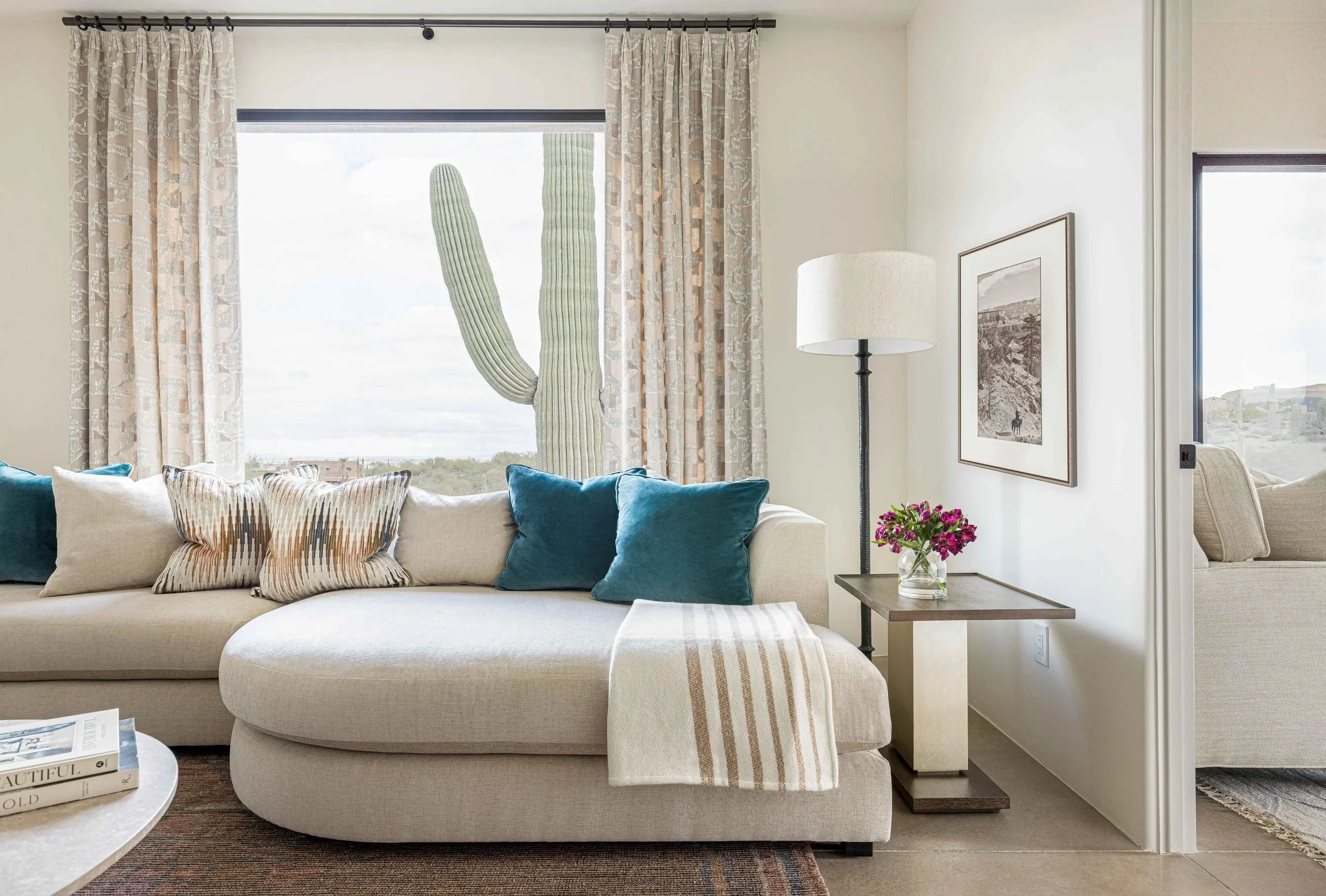
The house in this photograph is in Arizona. I ran and managed its completion from my studio on the Main Line, working closely with the local architect and builder, and my client was never once made to carry the distance. That was not luck. It was a method, and most of it happened before anyone broke ground.
If you are planning a second home in another state, the question is rarely whether it can be done well from afar. It can. The real question is who you hand it to, and how they will run it. This is how I approach vacation home interior design, and what I would look for if I were the one hiring.
Why distance is not the real problem
People assume the hard part of building far from home is logistics. Flights, time zones, a contractor you meet in person only a handful of times. Those things are real, but they are not where remote builds succeed or fail.
A house is made of several hundred decisions, and many of them arrive with a short window to answer. A tile is discontinued. A window opening shifts by two inches. The plumber needs a fixture on site by Thursday. When the right person has already made those decisions, the window closes quietly. When nobody has, the project stalls, or worse, someone guesses.
So the work of a remote build is not travel. It is making sure every decision is made by the right person before the moment it is needed.
It starts with the team, early
Long before the first deliverable is due, I sit down with the architect and the builder. We agree the timeline and the deadline for every key milestone, together.
When everyone works to the same calendar, the house stops producing surprises. On the Arizona project, that shared schedule became the spine of everything that followed. The builder knew exactly when each selection would land. The architect knew when drawings needed to be final. And my client knew what was coming, without having to chase anyone for it.
This is the first thing I would ask any designer you are considering: when do you meet the architect and builder, and what do you agree with them before work starts? A good answer is specific. A vague one usually means the designer will be reacting to the build rather than leading it.
The schedule drives the selections
Most of the panic people associate with building at a distance comes from late decisions. A material is chosen too late, it has a long lead time, and suddenly a whole trade is waiting.
I reverse that. Key materials and fittings are chosen long before the contractor needs them, each one timed to its own lead time. A stone with a fourteen-week lead time gets decided fourteen weeks early, plus a margin. Nothing waits on a decision, and no decision is ever rushed to rescue a delivery.
It sounds simple. It takes real discipline to hold, especially when the site is two thousand miles away and nobody is standing over the schedule but you.
Meetings shaped around what is coming next
The meetings follow the deliverable schedule, and their shape depends on where my client lives.
When a client is remote to me, we meet over Zoom, with an agenda tailored to whatever is due next. No standing calls for the sake of it. I travel to the site myself at the moments that genuinely need eyes: the framing, the rough-in, and the first finishes in the real light of the place.
When a client lives here on the Main Line and is building elsewhere, I can offer something quieter and just as valuable. They can see finishes in person before I approve them for the remote project. Someone stood in front of the actual stone and the actual hardware before it was signed off thousands of miles away. For many clients, that alone is worth the peace of mind.
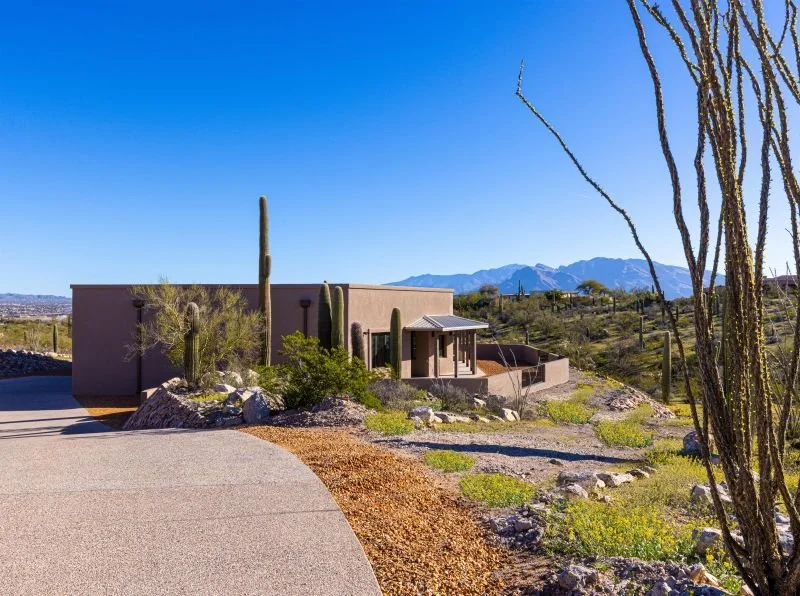
A desert asks for a different vocabulary. The light is harder and more generous at once, the horizon and ancient saguaros do the work that architecture does elsewhere, and a room that would read as serene in Pennsylvania can read as timid here. The brief was not to bring an Eastern house west. It was to write this house in its own language, with a clear discipline about proportion and restraint still holding the sentences together.
Knowing which decisions are yours
This is the part that takes twenty years to do well.
In the early meetings, I learn each client's priorities and preferences deeply enough to know which decisions are genuinely theirs, and which are mine to make on their behalf. Can I choose the finish on a door knob without a second thought? Or is that particular knob, for that particular person, one they will want to weigh in on?
I hold all of the decisions, and I shield my clients from the noise of the ones that do not need them. Being consulted on everything is simply another way of managing the project yourself. That is exactly what most of my clients hired me to avoid.
What makes vacation home interiors different
A primary home is designed around the rhythm of everyday life. A vacation home is designed around a feeling. The brief is less about how the kitchen handles a school-night dinner and more about how the place should feel on the first morning you wake up there.
That changes the design. Vacation home interiors often need to hold up to long empty stretches and then full houses of guests. They need to feel at ease in their setting, with materials and light that belong to the place rather than to your other address. And they need to be ready to live in the moment you arrive, with nothing left for you to finish.
A designer who understands this will ask you about the feeling first, and the function second.
How to hire an interior designer who specializes in vacation homes
If you are comparing designers for an out-of-state build, these are the questions I would want answered.
Who will actually lead my project? Ask whether the person you meet is the person who makes the selections, talks to the builder, and walks the site. At a larger firm, it often is not.
How do you work with an architect and builder you have never met? Listen for an early alignment meeting and a shared schedule, not a promise to "stay in touch."
When do you make selections? The right answer ties every key material to its lead time, well ahead of the build.
When will you be on site? A good designer names the moments that need eyes, and plans the travel around them.
How will you decide what to ask me? You want someone who learns your priorities and then carries the rest, not someone who sends you every decision.
How many projects do you take on at once? A remote build needs room. Capacity is not a detail; it is the whole service.
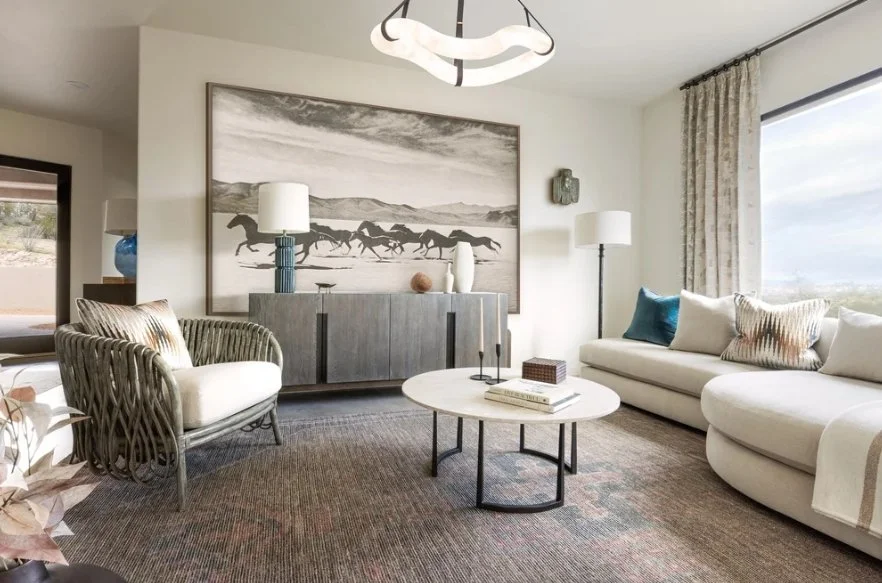
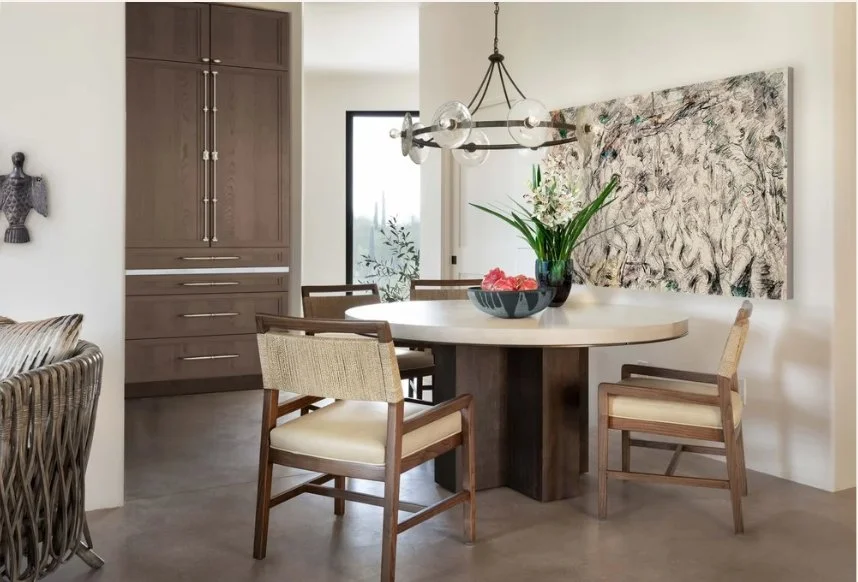
One accountable person, from first meeting to finished house
That is what building well from a distance really looks like. Not a client on constant call across time zones. A client who handed the whole thing to one accountable person, and came home, when it was finished, to a house in Arizona that felt as considered as if they had stood in it every day.
I take on about six projects a year, by design, so there is room to do this properly.
Planning a home out of state?
If you are building out of state, whether you live near me or far from me, the decisions worth mapping before ground breaks are the ones that quietly govern everything after. That is exactly what a first conversation is for.
So tell me: what is the one decision on your build you would most like someone to hold for you?
Explore our vacation home design service or schedule your complimentary call.

We would love to hear about your home.
Every project begins the same way — with a warm, unhurried conversation. No pressure, no commitment. Just a chance to find out if we are the right fit for each other.
Contact Vivian
