
Interior Designer vs Decorator: Which Interior Design Services in Philadelphia Are Right for Your Home
Most Philadelphia-area homeowners searching for design help run into the same frustrating pattern: they reach out to several professionals, receive wildly different proposals, and can't figure out why the scope and pricing feel so disconnected.
The short answer is that "interior designer" and "interior decorator" are used interchangeably online, but they describe genuinely different professionals with very different scopes of work. If you're evaluating interior design services in Philadelphia, PA, that distinction is the first thing you need to understand, because hiring the wrong type for your project doesn't just waste money; it can leave you managing complexity you weren't prepared for.
This article cuts through the confusion.
By the end, you'll know exactly which type of professional fits your project, what a full-service residential interior design relationship actually looks like from first call to final install, and how to evaluate interior design firms in Philadelphia before you sign anything. For homeowners who want a clear benchmark for what high-end, end-to-end interior design services in Philadelphia look like in practice, Evermore Interiors offers a useful starting point for that conversation.
What separates an interior designer from an interior decorator
The functional difference is simpler than most people expect. A decorator works on the visual layer of a space: furniture selection, color palettes, textiles, art, and accessories. They style a room that already functions.
A full-service interior designer works on the structural logic of the space first, addressing layout, flow, lighting architecture, material specifications, and contractor coordination before any styling happens. These are not two versions of the same service at different price points. They are fundamentally different engagements.
The decorator's role: style and surface
The era of stark white modernism is giving way to something richer. Limewash walls, aged brass fixtures, honed limestone, linen upholstery, and walnut millwork are showing up across Main Line renovations right now, and for good reason. These materials age beautifully, develop character over time, and feel personal in a way that a glossy white kitchen never quite does. The shift isn't away from sophistication, it's toward warmth and depth as the new definition of sophistication.
The designer's role: structure, process, and full project ownership
A licensed or experienced residential interior designer takes on a fundamentally broader scope.
This includes spatial planning, technical drawings, finish specifications, vendor coordination, procurement management, and installation oversight.
In Pennsylvania, interior designers working on certain project types may hold formal credentials and education requirements that decorators generally do not need.
The clearest way to frame it: designers plan how a space works; decorators decide how it looks. For projects involving layout changes, contractor coordination, or multiple rooms refreshed simultaneously, the designer's scope is the one that actually matches the work.
What full-service interior design services in Philadelphia actually look like
Most homeowners hiring a designer for the first time don't have a clear picture of what they're actually purchasing. Knowing the real sequence helps you evaluate proposals intelligently and ask the right questions before committing.
From discovery call to concept development
The process typically starts with an initial interior design consultation in Philadelphia where the designer learns about your lifestyle, priorities, aesthetic preferences, and project scope. This is followed by a site assessment and then concept development: mood boards, floor plans, material palettes, and, for more complex projects, 3D renderings that let you visualize the direction before any commitments are made. Some Philadelphia interior designers charge a flat fee for this phase, based on current market rates across Philadelphia-area firms, that figure typically falls in the $350 to $500 range, while others apply it as a credit toward the full project fee. Either way, a clear concept phase protects you from expensive surprises later.
Procurement, vendor coordination, and installation
This is where full-service design earns its fee. Past the concept phase, a full-service firm sources furniture, finishes, and fixtures through trade-only vendors you can't access independently, manages orders and tracks timelines, coordinates with contractors and tradespeople, and oversees final installation and styling. You make decisions at defined checkpoints; the designer handles everything in between. For busy professionals and executives who don't want to spend weekends chasing tile deliveries or contractor callbacks, this hands-off experience is the core value of the engagement, not just the aesthetic result at the end.

We would love to hear about your home.
Every project begins the same way — with a warm, unhurried conversation. No pressure, no commitment. Just a chance to find out if we are the right fit for each other.
Contact Vivian
Projects Philadelphia homeowners most commonly bring to designers
Understanding which projects genuinely require a full-service designer, versus which ones an interior decorator in Philadelphia can handle, helps you scope your budget and expectations from the start.
Kitchen remodels and primary suites
These two project types consistently require a designer rather than a decorator because both involve layout decisions, fixture and finish specifications, contractor coordination, and careful sequencing. In a kitchen, a designer adds cabinetry layout, material integration, appliance specifications, and lighting plans.
In a primary suite, the value comes from spatial planning, lighting design, custom millwork coordination, and material selections that hold up over time. Both projects also involve multiple tradespeople, plumbers, electricians, cabinetmakers, tile setters, and painters, who need to be coordinated around a clear sequence. Managing that level of complexity falls well outside a decorator's typical scope.
Whole-home refreshes and relocation projects
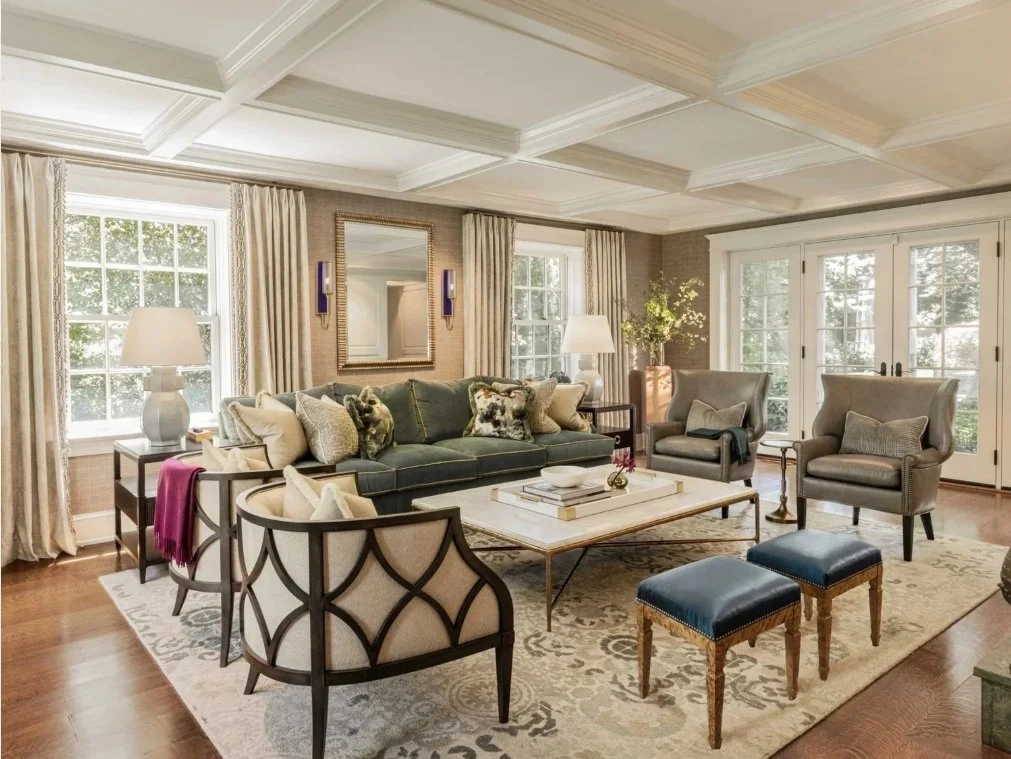
The whole-home scenario is increasingly common among Main Line clients moving into a larger property or refreshing a home that hasn't been updated in 15 years. The challenge here isn't any single room; it's achieving cohesion across every space without managing a dozen separate vendor relationships.
Relocation projects add a time pressure component. Clients moving to the Philadelphia area from out of state often want their new home to feel finished and intentional from the day they move in. A firm with deep local sourcing relationships and an established contractor network can compress that timeline significantly compared to starting from scratch.


Why the Main Line and Villanova set a different bar
The residential character of the Main Line and its communities, including Villanova, Wayne, Bryn Mawr, and Gladwyne, creates design conditions that don't exist in most other markets.
Older homes carry architectural detail worth preserving. Square footage is larger. Clients have specific taste and equally specific expectations around craftsmanship, discretion, and the quality of the finished result.
Neighborhood context and what it shapes
The built environment on the Main Line influences design decisions at every level. Period architecture creates formal and informal living zones that need to be honored rather than overridden. Large entertaining spaces require lighting and furniture plans that work at both intimate and full-capacity scale. Indoor-outdoor connections, primary suite retreats, and kitchen spaces designed for both daily family use and hosting all appear consistently in projects across this market. A Philadelphia interior designer who knows the local contractor ecosystem and material sourcing options brings a meaningful practical advantage over one who is learning the area while working on your home.
What affluent homeowners in this market expect
The priorities that distinguish luxury clients on the Main Line go beyond a beautiful portfolio. Confidentiality matters. Responsiveness matters. The ability to deliver a genuinely hands-off experience, where the client is never chasing a contractor or a delayed order, is often the deciding factor.
Access to trade-only resources and custom artisanal work also sets full-service firms apart from decorating-only providers. Choosing a firm based purely on portfolio photos without evaluating their process and communication style is one of the most common and costly mistakes in this market. A beautiful book of work means nothing if the project experience is disorganized and client-managed.
How to evaluate interior design services in Philadelphia before you commit
The Philadelphia residential interior design market includes firms across a wide range of service levels, from one-room consultation packages to comprehensive full-service management. Understanding the spectrum helps you compare proposals on equal terms.
Service levels and what full-service actually includes
Three service tiers are common among interior designers in Philadelphia: consultation-only, per-room design packages, and full-service end-to-end management. Full-service typically includes spatial planning, material and finish selections, furniture curation, procurement, project management, vendor coordination, and final installation.
Regardless of tier, construction labor itself, highly technical engineering work, and the cost of furnishings and materials are almost always excluded, those costs sit separately from design fees. Some firms in the Philadelphia area also require a minimum project investment, commonly in the $15,000 to $25,000 range, for full-service engagements.
Pricing benchmarks: consultation through full renovation management
In the current Philadelphia market, initial consultations typically run from $200 to $800 for a first in-home session. Per-room design work ranges from around $1,000 to $5,000 or more depending on scope and the firm's experience level. Full-service renovation management commonly starts around $15,000 and reaches $20,000 to $35,000 or higher for larger or more complex whole-home projects.
These numbers reflect design fees only. The access to trade pricing that comes with a full-service relationship often offsets a meaningful portion of those fees compared to purchasing furniture at retail independently.

A short checklist before you sign
Before committing to any firm, ask these questions directly and evaluate the clarity and confidence of the answers:
Do you manage procurement, vendor relationships, and order tracking throughout the project?
Who is my primary point of contact from start to final installation?
How do you handle budget overruns or unexpected delays?
What does your fee structure cover, and what is explicitly excluded?
Can I see a completed project similar to mine in scope, style, and budget?
How do you communicate with clients during the project, and at what frequency?
A firm that answers all six clearly and specifically, without hedging or deflecting, is worth your time. One that struggles to explain its own process is a firm worth walking away from.
Evermore Interiors: a different kind of design partnership
For Main Line homeowners who want a genuinely hands-off, high-quality design experience, Evermore Interiors represents what that relationship can look like when it's done well. Founded and led by Vivian Mulder, Evermore is a full-service residential interior design firm based in Villanova, PA, with 20 years of experience serving professionals, physicians, and entrepreneurs across the Main Line and greater Philadelphia area.
20 years of experience and an end-to-end philosophy
Vivian's approach is deeply personal from the first conversation. The firm manages every detail from initial discovery through final installation, which means clients are never chasing a contractor, a delayed shipment, or a vendor question.
The client's job is to make decisions at defined checkpoints; Evermore handles everything else. The firm also works with national clients who want sophisticated design managed remotely, making it a strong option for homeowners relocating to the Philadelphia area or managing a renovation from out of state.
What that looks like in a real project
Consider a project type that comes up regularly in this market: a busy professional couple relocating from out of state to a larger Main Line home. They want the house to feel finished and cohesive from move-in, covering the kitchen, primary suite, and main entertaining spaces.
The Evermore process starts with a clear discovery call to understand how the family actually lives, not just what they want the rooms to look like. From there, a defined concept is presented, selections are made at structured review points, and the project moves through procurement and installation without the clients managing a single vendor call.
The finished home reflects their lifestyle and taste, not a generic luxury aesthetic. A testimonial from a client who experienced that process first-hand is more useful than any portfolio image, and Evermore's track record across similar projects speaks directly to what this kind of engagement delivers.
Making the right call for your project
The decision between a designer and a decorator comes down to what your project actually requires. If the work is primarily cosmetic and contained to a functioning space, a skilled decorator may be exactly the right fit. If you're renovating, relocating, refreshing multiple rooms, or simply want a high standard of finish without managing the process yourself, a full-service interior designer is the professional the project calls for.
The difference that matters most isn't portfolio depth. It's process clarity, communication quality, and a firm that takes genuine ownership of complexity so you don't have to. For homeowners on the Main Line and across the greater Philadelphia area ready to take that next step, Evermore Interiors offers a private consultation and a virtual discovery call to start the conversation. Reach out to Vivian directly to discuss your project and take the first step toward a home that works as beautifully as it looks.
Frequently asked questions about interior design services in Philadelphia
-
Full-service interior design services in Philadelphia generally cover spatial planning, material and finish selection, furniture curation, procurement through trade-only vendors, project management, contractor coordination, and final installation. The exact scope varies by firm and service tier, so always confirm in writing what is and isn't included before signing.
-
Philadelphia interior designers manage the structural and functional planning of a space, layout, technical drawings, contractor coordination, and finish specifications. Interior decorators in Philadelphia focus on the visual layer: furniture, color, textiles, and accessories. Decorators work best on cosmetic refreshes of spaces that already function well; designers are the right choice for renovations, layout changes, or whole-home projects.
-
Pricing varies widely by scope and firm. Initial consultations typically run $200 to $800. Per-room packages generally range from $1,000 to $5,000 or more. Full-service renovation management commonly starts around $15,000 and can reach $35,000 or higher for complex whole-home projects. These figures cover design fees only, furnishings, materials, and construction labor are separate costs.
-
Start by clarifying your project scope: cosmetic refresh or structural renovation? Then evaluate firms on process clarity, communication approach, and relevant project experience, not just portfolio aesthetics. Ask each firm the six checklist questions above before committing. For high-end residential projects on the Main Line, prioritize firms with deep local contractor relationships and a structured, client-managed process.
We would love to hear about your home.
Every project begins the same way — with a warm, unhurried conversation. No pressure, no commitment. Just a chance to find out if we are the right fit for each other.
Contact Vivian
